Edge Pulls and Flush Pulls: The Rise of Minimalist Cabinet Hardware
What Are Edge Pulls and Flush Pulls?
Edge pulls and flush pulls are two distinct but related hardware types that both serve the same fundamental purpose: providing grip on a cabinet door or drawer front without projecting outward from the surface. They are the hardware solution for handleless or near-handleless kitchen aesthetics.
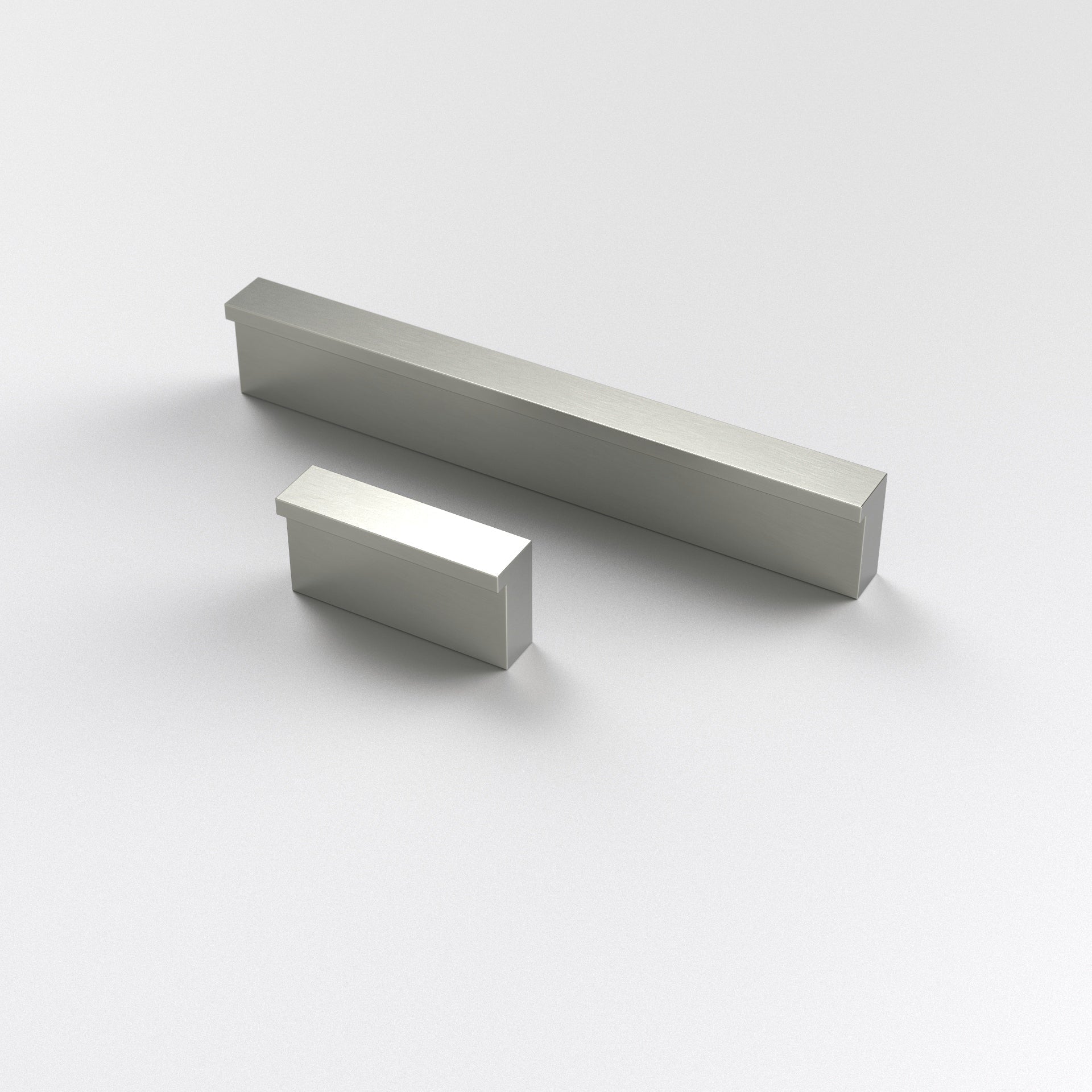
An edge pull is mounted on the edge of a door or drawer front — the narrow side profile that is exposed when the door is slightly ajar. When closed, it is essentially invisible from the front. To open the door, you reach around to the edge and pull. This makes edge pulls the most visually minimal hardware option available — from the front, the door appears to have no hardware at all.
A flush pull is set into a recess in the face of the door or drawer front. It sits level with the surface — flush — and provides a finger-pull grip without protruding. It is more visible than an edge pull when viewed from the front, but it creates a very clean, architectural look and has a satisfying tactile quality — the slight depression in the surface that your fingers find naturally.
Why They Have Become So Popular
The handleless kitchen aesthetic — clean, flat fronts, no projecting hardware — has been growing in popularity for over a decade. It suits the direction of contemporary interior design: less decoration, more considered materiality, a focus on form and surface quality rather than applied ornament.
But the truly handleless kitchen — operated entirely by push-to-open mechanisms — has limitations. It can feel cold and impractical, particularly on heavy doors and large drawer fronts. Edge pulls and flush pulls offer an intelligent compromise: the visual cleanness of a handleless scheme with the practicality of real hardware grip.
Where Edge Pulls Work Best
Edge pulls are most effective on tall, full-height cabinet doors — larder units, tall cupboards, and island unit sides — where the finger grip on the edge is easily reached and the visual impact of a projecting pull handle at full height would be significant. They are also excellent on drawer fronts in handleless kitchen schemes, where they allow the drawer faces to read as a clean, uninterrupted surface.
Daniel Oxford makes two edge pull designs: the Arden Edge Pull and the Coven Edge Pull. Both are machined from solid brass and hand-finished in Birmingham. The Arden is a minimalist, rectangular form; the Coven has a slightly more sculptural profile. Both are available in the full range of Daniel Oxford finishes.
Where Flush Pulls Work Best
Flush pulls work particularly well on drawer fronts within an otherwise-handleless kitchen, on internal door fronts — larder door linings, sliding panel doors — and as a secondary hardware element in mixed-hardware schemes. They have a long history in British furniture design and are a natural choice for fitted furniture applications — wardrobes, library units, fitted bedroom furniture — as well as kitchens.
Our Battersea Drawer Flush Pull is designed for exactly this application. It is routed into the drawer front during installation and sits perfectly level with the surface, providing a solid finger-grip in the characteristic hexagonal Battersea form.
Combining Edge and Flush Pulls with Other Hardware
Edge and flush pulls rarely appear alone in a kitchen specification. More commonly, they are used as part of a mixed hardware scheme where the primary cabinet doors are fitted with standard pull handles or T-bar pulls, and edge or flush pulls are used on specific elements — island drawers, larder units, internal slides — where minimal visual hardware is desired.
The key to making a mixed hardware scheme work is consistency of finish. If your primary hardware is in Polished Brass Wax, your edge pulls and flush pulls should be the same. Daniel Oxford's suite-based collections are designed for exactly this: every piece in a suite is available in the same finishes, machined to the same standards, so the complete specification reads as a coherent whole.
Installation Considerations
Edge pulls and flush pulls require more precise installation than surface-mounted hardware. A flush pull requires a recess routed into the door front — typically by the kitchen manufacturer or a skilled joiner — to the exact dimensions of the hardware. Edge pulls require a clean, square edge profile to sit correctly. Both are well-suited to bespoke and custom kitchen furniture, where the cabinetry is made to incorporate the hardware specification from the outset.
Daniel Oxford supplies full technical drawings and templates for all edge pull and flush pull products. Contact our team to request installation guidance for your project.