Polished Brass vs Brushed Brass: Which Finish Is Right for Your Kitchen?
The Two Most Popular Brass Finishes
When customers come to us at Daniel Oxford, the most common question we are asked is: polished or brushed brass? Both are warm, both are beautiful, and both develop character with use — but they suit different kitchens and different maintenance preferences. This guide breaks down everything you need to know.
What Is Polished Brass?
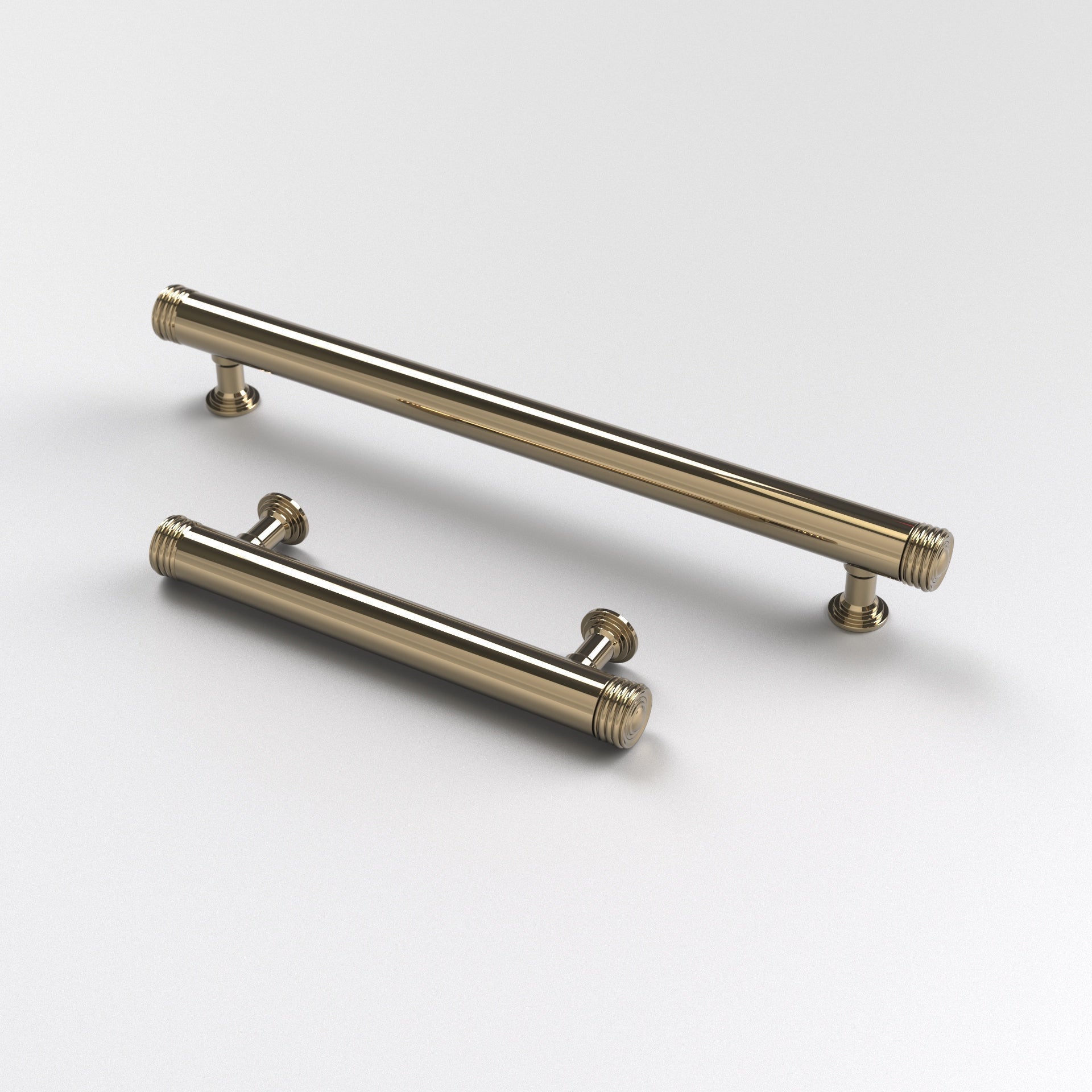
Polished brass is the classic, high-lustre finish. It is bright, reflective, and unmistakably gold in tone. Historically it was the dominant finish for quality cabinet hardware in British kitchens and furniture — the look you find on period pieces, estate homes, and traditional cabinetry.
Polished brass catches the light dramatically, which makes it visually striking in larger kitchens with good natural light. Over time, genuine solid polished brass develops a patina — a slight dulling and deepening of tone in areas of heavy contact. This is a feature, not a flaw. It is the natural ageing of a real material, and it is part of what makes solid brass hardware worth investing in. Plated brass will chip and flake; solid brass simply mellows.
What Is Brushed (Satin) Brass?
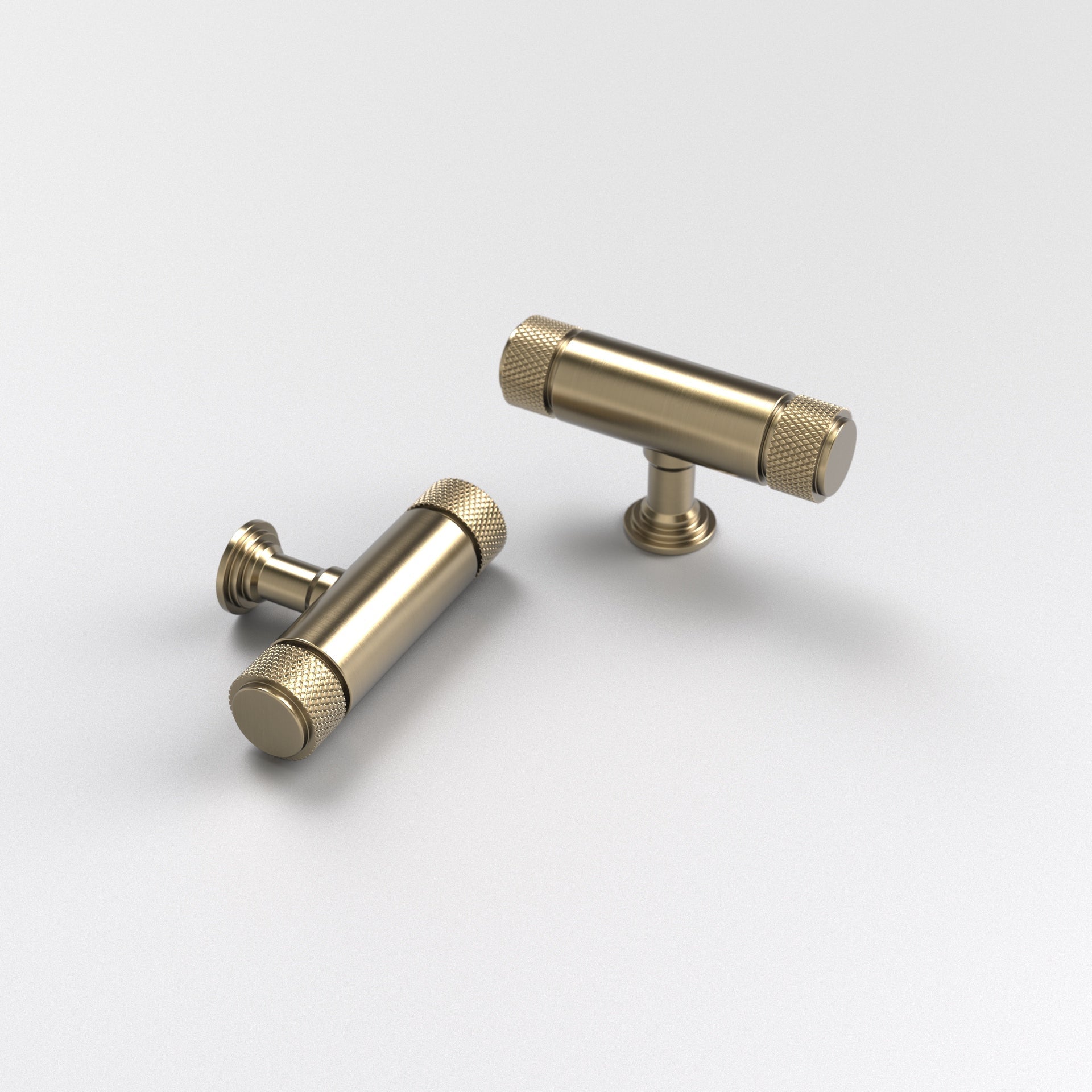
Brushed brass — also called satin brass — is the same material as polished brass but with a finely textured surface that diffuses light rather than reflecting it. The result is a warmer, softer gold tone with a matte-to-satin sheen. It reads as more contemporary than polished brass, and more forgiving in everyday use.
Fingerprints, water marks, and light scratches are far less visible on a brushed finish, which makes it the preferred choice for family kitchens and high-use cabinetry. It is also more versatile across kitchen styles — brushed brass works in both traditional and modern settings.
Which Finish Ages Better?
Both finishes develop patina over time — this is the nature of solid brass. On polished brass, patina tends to be more visible and varied, creating highs and lows of tone that many customers find beautiful. On brushed brass, the ageing is more even and subtle, preserving the matte quality. Neither finish is more durable — both are solid brass throughout, never plated, and both carry our lifetime material guarantee.
Choosing Based on Kitchen Style
Choose polished brass if: you have a traditional or period kitchen, you want a bold statement hardware choice, your kitchen has good natural light, and you appreciate hardware developing character over time.
Choose brushed brass if: you have a contemporary or transitional kitchen, you want a finish that shows fingerprints less, you are pairing hardware with warm-toned stone or timber, or you want hardware that works equally well in kitchen, bathroom, and dressing room settings.
Other Finishes in the Range
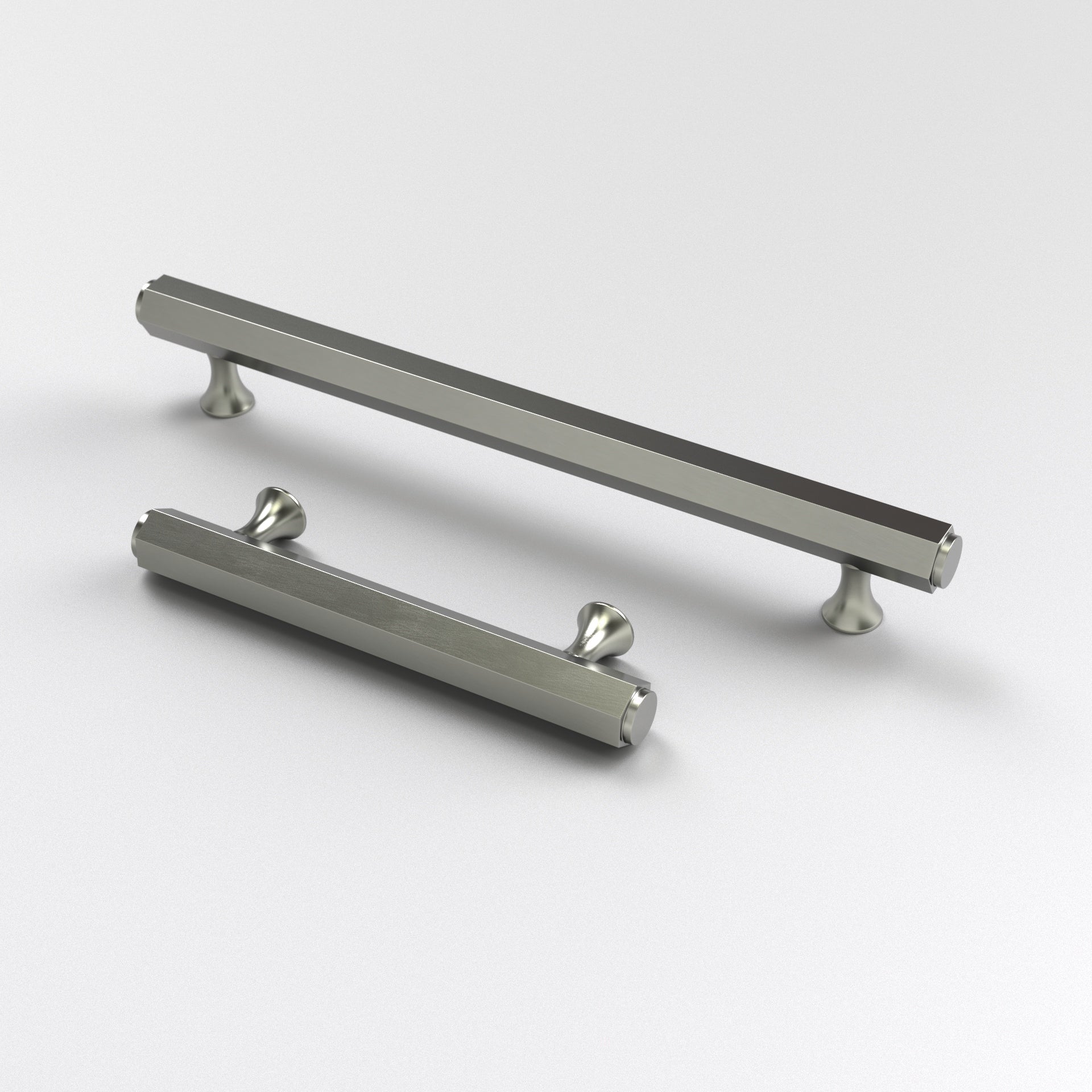
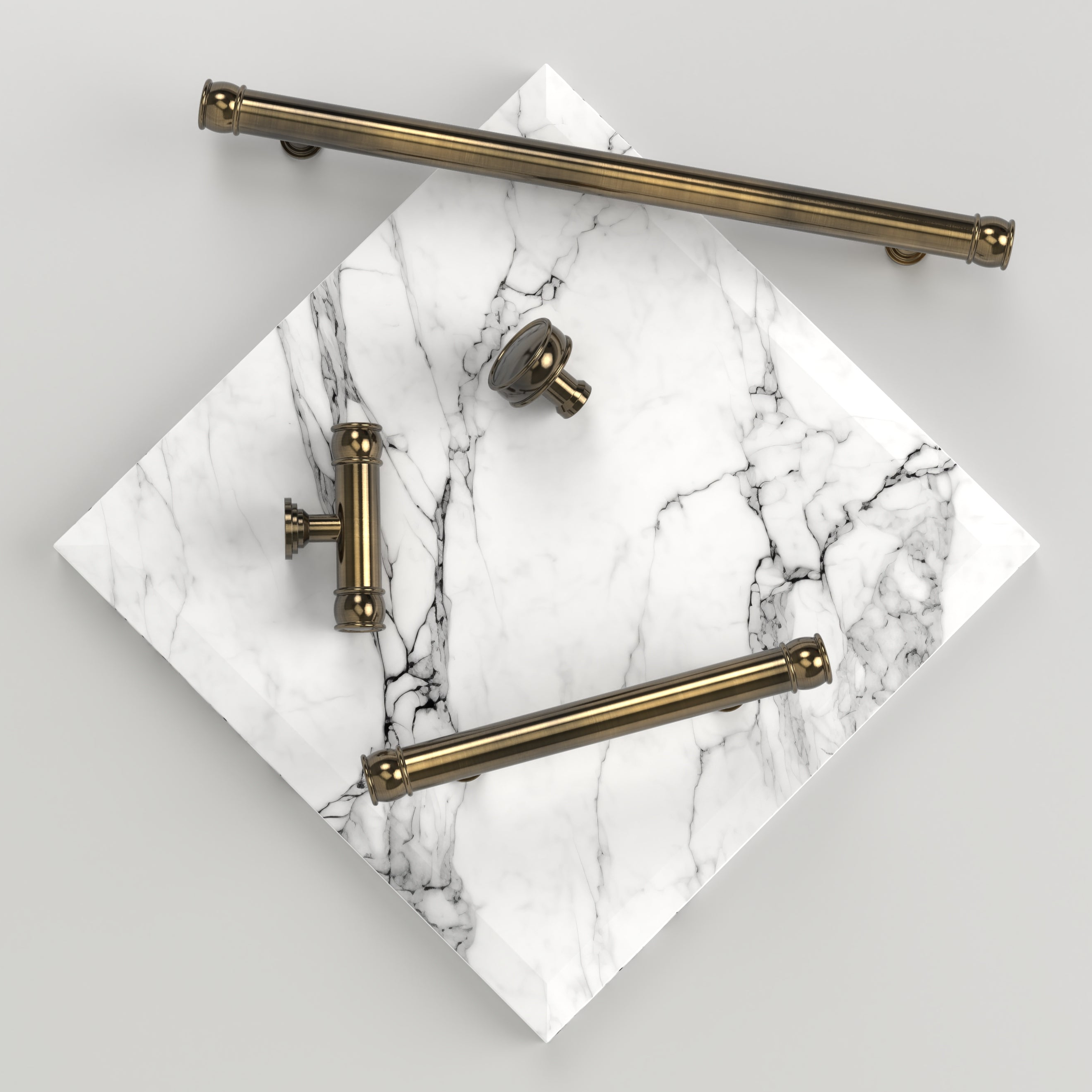
Beyond polished and brushed brass, the Daniel Oxford range is available in 12 finishes including antique brass, dark bronze, aged brass, brushed nickel, polished nickel, polished chrome, and brushed chrome. We recommend ordering a sample set and placing the samples in your actual kitchen light before committing. Browse our full range of solid brass cabinet pull handles and cabinet knobs and T-bars. All pieces are made to order in Birmingham with a lead time of approximately four weeks.